Home / Services
Fibreglass pool resurfacing in Melbourne
Fibreglass pools usually need resurfacing somewhere between 15 and 30 years old. We bond a new seamless fibreglass and gelcoat membrane to your existing shell, so your pool looks and feels new again.
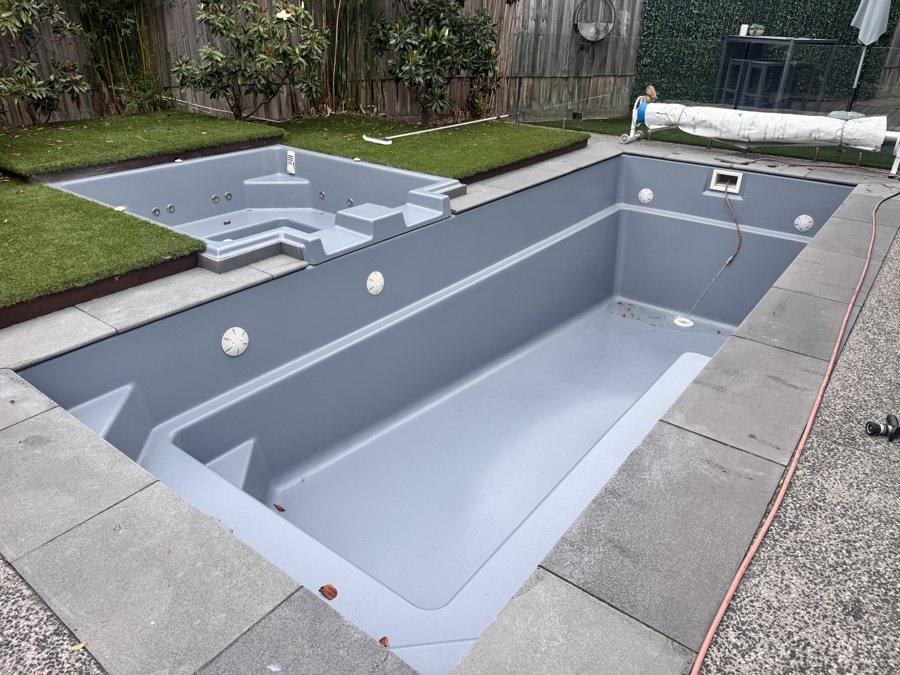
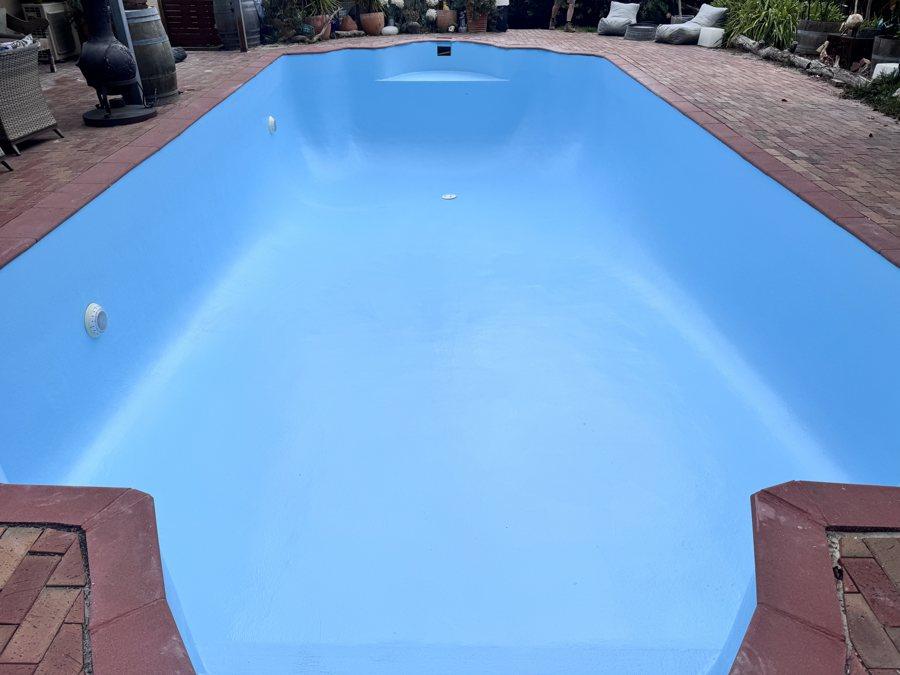
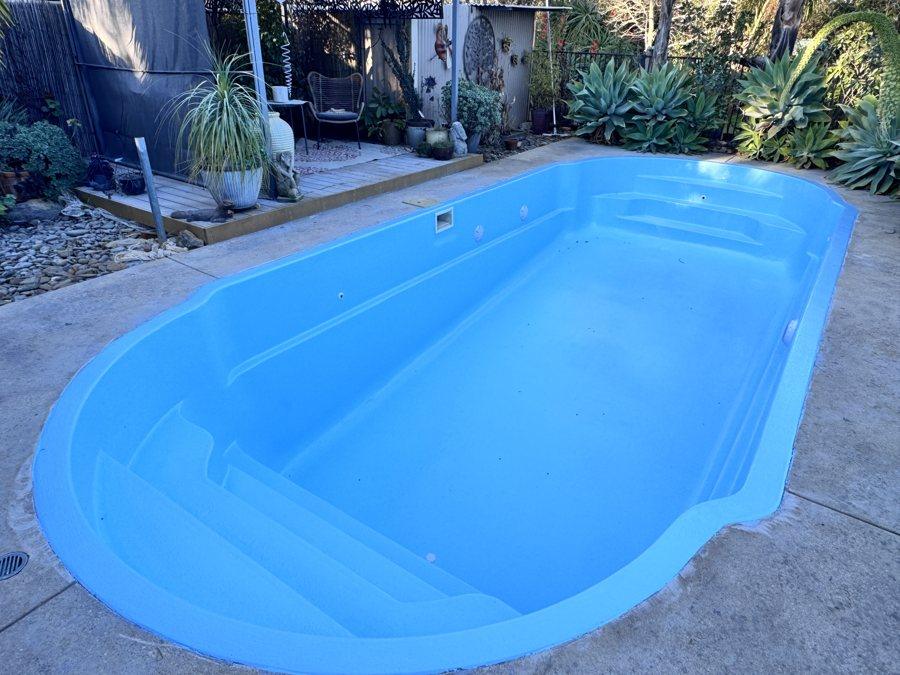 Fibreglass pool · new gelcoat finish
Signs your pool is due
What we fix
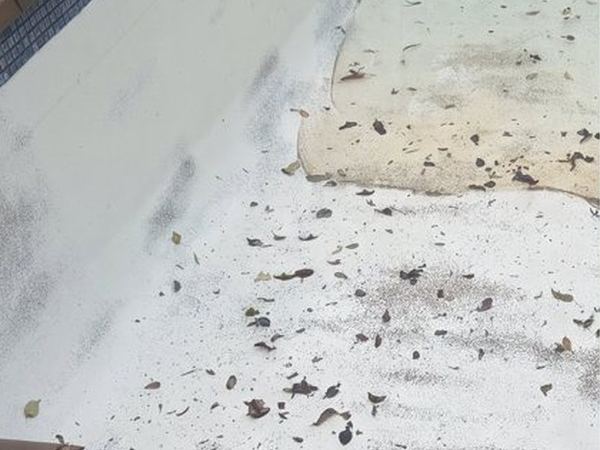
Faded or chalky gelcoat
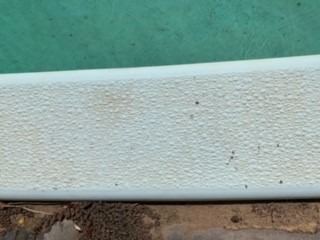
Years of sun and pool chemicals break down the gelcoat colour layer. The surface turns white and chalky to the touch.
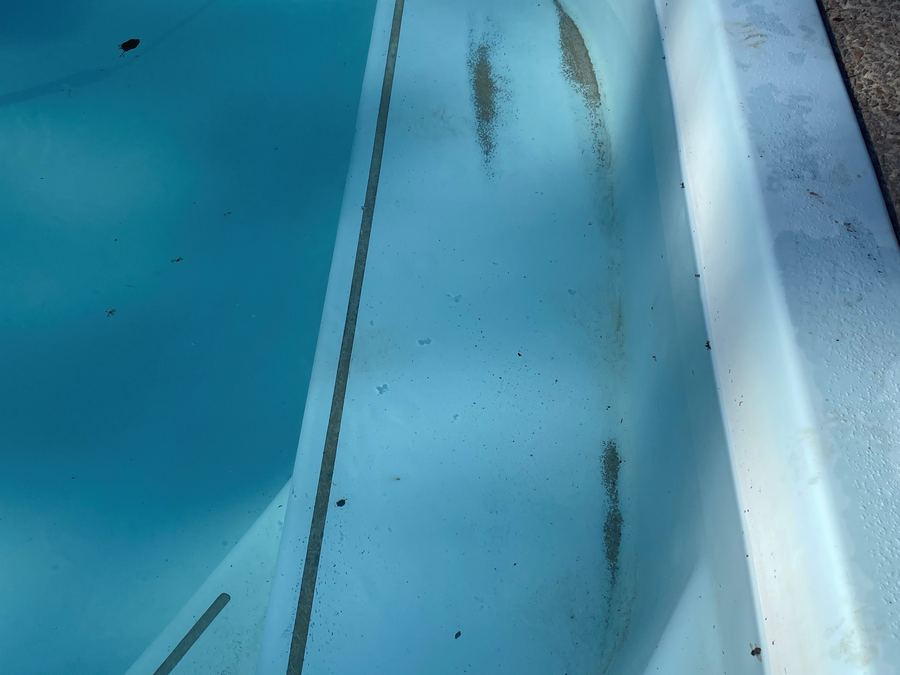
Brown or dark patches
Brown patches on steps, seats and the floor usually mean the gelcoat has worn right through to bare fibreglass. That area is no longer properly waterproof.
Osmosis blisters
When water gets between the layers of fibreglass, blisters push out from the surface. Left untreated, they spread and get worse.
Crazing
The gelcoat becomes brittle with age and fine cracks form. It looks bad, and it lets water in over time.
Black spot
A mould that settles into worn, porous gelcoat. It stains the surface and is very hard to remove once it takes hold.
Cracks and splits
Older fibreglass becomes brittle. Ground water after heavy rain or ground movement can crack an older shell.
Our system
How we resurface a fibreglass pool
We drain and protect the pool, then clean and mechanically abrade the existing gelcoat so the new layers bond properly. Osmosis blisters are cut out and re-laminated, and cracks are repaired before anything else goes on.
The whole pool is then laminated with fibreglass matting in vinylester resin. A vinylester base coat follows, then a UV-stabilised gelcoat finish in your chosen colour.
The result is a new internal shell, bonded to your original pool, with no worn or porous surface left exposed to the water.
Brown patches are worth acting on early. Exposed fibreglass lets water in, and osmosis damage costs more to fix the longer it goes.
Recent work
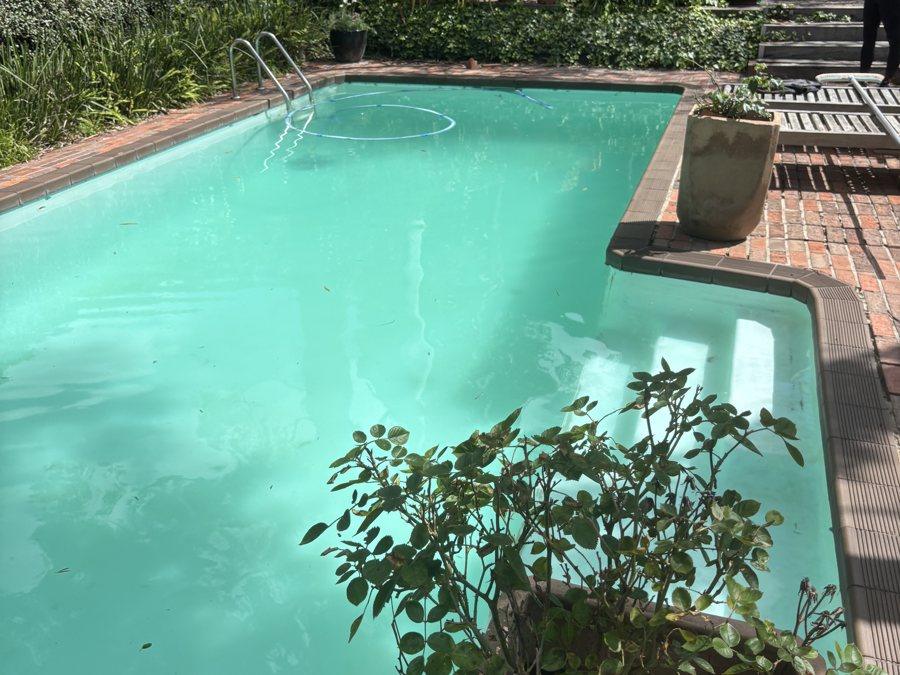
Fibreglass pools we've resurfaced
Questions
Common questions
How do I know if my fibreglass pool needs resurfacing?
Common signs are a chalky or faded surface, brown or dark patches on steps and seats, fine cracking in the gelcoat (crazing) and blisters. Brown patches usually mean the gelcoat has worn through to bare fibreglass, which lets water in and can lead to osmosis.
How long does a fibreglass pool resurface take?
Most residential pools are done in about a week on site, weather permitting. Your condition report gives you the expected timeline for your pool.
Can you change the colour of my pool?
Yes. The new gelcoat finish comes in a range of colours, and your report shows each colour on real finished pools.
Do I need to remove my pool?
No. We prepare your existing shell and bond a new fibreglass membrane to it. The old pool stays in place as the base.